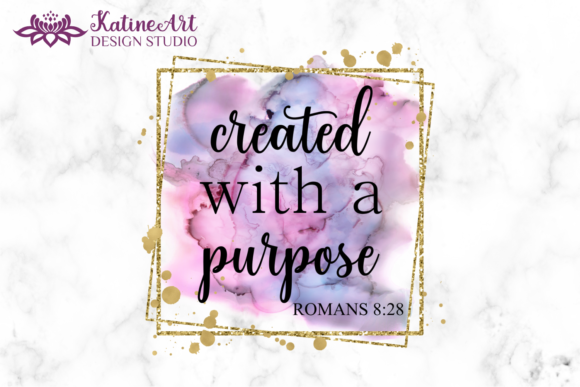
What Does It Truly Mean to Be "Created with a Purpose"? A Christian Perspective
The search for meaning is perhaps the most universal human experience. From the moment we can formulate the question, "Why am I here?" we embark on a journey to find our place in the world. In a modern culture saturated with noise, consumerism, and fleeting self-help trends, the answer often feels just out of reach. The Christian faith, however, presents a profound and deeply anchored response: you are not an accident. You are created with a purpose. This isn't just a comforting Christian quote; it is a foundational truth that reshapes identity, work, relationships, and resilience. Let's explore what it truly means from the ground up.
1. The Biblical Foundation: Where Does This Idea Come From?
The concept of being created with a purpose is not a modern invention. It is woven into the very first pages of the Bible and echoed throughout its narrative. To understand its depth, we must look at the original source.
The Masterpiece (Ephesians 2:10)
Perhaps the most direct biblical quote on this topic is found in Ephesians 2:10: "For we are God’s handiwork, created in Christ Jesus to do good works, which God prepared in advance for us to do." The Greek word translated as "handiwork" is poiema, from which we derive the English word "poem." You are not a random byproduct of cosmic forces; you are a carefully crafted poem, a work of art designed with intention. This verse also dismantles the pressure to "find" your purpose from scratch. It suggests that your purpose was prepared in advance. Your job is not to create a purpose, but to step into the one already designed for you.
Known Before Birth (Psalm 139 & Jeremiah 1:5)
The Psalmist declares, "For you created my inmost being; you knit me together in my mother’s womb" (Psalm 139:13). This imagery of knitting implies intentionality, care, and a specific design. Similarly, God tells the prophet Jeremiah, "Before I formed you in the womb I knew you, before you were born I set you apart" (Jeremiah 1:5). This establishes a powerful truth: your purpose is not an external achievement to be earned; it is an intrinsic part of who you are. It is tied to your identity as a beloved creation of God.
2. Unpacking the "Christian Quote": Common Misunderstandings
While the phrase "created with a purpose" is popular in Christian circles, it is often misunderstood. You may have heard it and felt confused, frustrated, or even inadequate. Let's clear up some of the most common assumptions that hold people back.
- Misunderstanding 1: Your Purpose is Your Career. Many people equate purpose with a job title, such as "pastor," "missionary," or "doctor." While your career can be a significant part of your calling, it is not the whole picture. Your primary purpose is universal: to love God and love your neighbor (Matthew 22:36-40). A stay-at-home parent, a retired grandparent, or a factory worker living out this command is walking in their purpose just as fully as a full-time minister. Purpose is a way of being, not just a job description.
- Misunderstanding 2: It Means a Perfect, Easy Life. There is a dangerous teaching that if you are in God's will, life will be smooth. This is not biblical. Jesus Himself was perfectly in God's will and faced immense suffering, betrayal, and death. Being created with a purpose does not grant you immunity from pain. Instead, it gives you an anchor in the storm. Your purpose provides meaning in the suffering, helping you to persevere and grow.
- Misunderstanding 3: You Have to "Find" It Like a Hidden Treasure. Many Christians experience paralysis waiting for a lightning bolt of revelation to reveal their "one true purpose." This overlooks the fact that God has already revealed the majority of His will for your life in Scripture. You don't need a special vision to know that you are called to be honest, faithful, generous, and kind. The specifics of your location or career are secondary applications of this already-revealed purpose.
3. Living Out Your Purpose in Modern Life
Understanding the theology is crucial, but how does this truth function in the messy reality of daily life? Here is how the "created with a purpose" worldview transforms specific areas.
In Work and Business
Seeing your work as a vocation (from the Latin vocare, "to call") radically changes your Monday morning. Whether you are a CEO, a software developer, or a barista, you are not just working for a paycheck. Colossians 3:23 instructs, "Whatever you do, work at it with all your heart, as working for the Lord, not for human masters." This means your purpose in business is to serve your colleagues, treat customers with dignity, and operate with integrity. A Christian business owner isn't just maximizing profit; they are stewarding resources and creating an environment where employees can flourish. Your workspace becomes a platform for your purpose.
In Creativity and Education
If you are a creator—an artist, writer, musician, or designer—your creative work reflects the Creator in whose image you were made. Your purpose is not limited to creating explicitly "Christian" content. A beautifully designed website, a moving piece of music, or a well-crafted novel that explores truth and redemption is an act of purposeful creation. For students, education is the stewardship of the mind. Asking "How can I learn to serve God and others better?" turns studying from a chore into a form of worship and preparation for future purpose.
In Daily Relationships
This is where the concept becomes most practical. If every person you meet is also created with a purpose, it transforms your interactions. Difficult conversations with your spouse become opportunities for grace. Patience with your children becomes a spiritual discipline. Even small acts of kindness to a neighbor or a stranger become an essential part of your purpose. The "Great Commandment" to love your neighbor is the daily, tangible expression of your divine design.
4. The Transformative Impact: Why This Matters
Adopting this worldview has profound psychological and spiritual benefits. It directly addresses some of the deepest anxieties of the modern age.
Identity and Self-Worth
Our culture ties self-worth to performance, appearance, and social status. This creates a relentless, exhausting cycle of striving. The "created with a purpose" worldview offers a radical alternative. Your worth is not based on what you do, but on whose you are. You have intrinsic value because you were intentionally designed by the King of the Universe. This leads to a secure identity that is not easily shaken by failure or criticism.
Resilience in Pain
When life falls apart, the question "Why am I here?" becomes urgent. If you believe your life is random, suffering can feel pointless and crushing. But if you believe you are created with a purpose, you can shift your question from "Why is this happening to me?" to "What good can come from this?" or "How can I trust God in this?" This doesn't make pain disappear, but it gives it context and provides a pathway through it. Your purpose becomes a reason to press forward.
Decision Making and Priorities
Every day we face choices about our time, money, and energy. The filter of purpose simplifies these decisions drastically. Instead of asking, "What will make me happiest or richest?" you begin to ask, "What choice best aligns with the purpose for which I was created?" This brings clarity to career changes, financial investments, and how you spend your evenings and weekends. It helps you say "no" to good things so you can say "yes" to your best things.
5. Connecting with the Creator to Discover Your Purpose
This brings us to the most critical point. Since purpose comes from the Creator, it cannot be fully understood apart from Him. If you want to know the purpose of a painting, you must ask the artist. If you want to know the theme of a novel, you must speak with the author.
The journey to understanding your purpose is a journey of relationship. It begins with prayer—not as a ritual, but as a conversation with your Designer. It involves reading Scripture, not as a rulebook, but as a love letter and an instruction manual for how life works best. It flourishes in a community of other believers who can help you see your gifts and calling more clearly.
Furthermore, purpose is often found in motion. As the saying goes, "Don't try to find your purpose; live your way into it." Start serving a need in your church or community. Try using your gifts in a new way. Often, we discover our purpose not by sitting still in contemplation, but by stepping out in faith and obedience. Jesus taught the paradoxical truth that you find your life by losing it—purpose is discovered by giving it away.
Conclusion: A Journey of Alignment
The phrase "created with a purpose" is far more than a decorative Christian quote to hang on a wall. It is a living, breathing reality that has the power to transform every aspect of your existence. It removes the heavy burden of having to invent your own meaning and replaces it with the humble, joyful work of discovering the meaning God has already woven into your DNA.
In a world that often feels chaotic and random, the biblical message stands as a beacon of hope. You are not a mistake. You are not an accident. You are the poiema of God—a masterpiece designed with intention, equipped with specific gifts, and called to a unique mission. The most fulfilling journey you will ever take is the one back to your Creator, discovering step by step what it truly means to be created with a purpose.