Jesus Christ Points the Finger to the Side
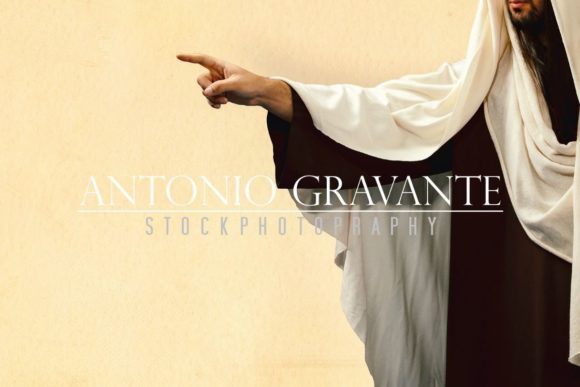
You do not need religious training to recognize the visual pull of Jesus Christ pointing a finger to the side. The pose bypasses passive viewing. It is a direct gesture that says “look there” or “follow this.” For creative professionals, that single diagonal arm holds practical lessons in composition, persuasion, and directing attention.
The real power is not the finger itself. It is the tension between stillness and motion. The body stays calm, the gaze is steady, but the arm cuts across the frame and forces your eyes to move. Most portraits demand you look at the subject. This one demands you look with them. That shift is what makes the image useful for creators, marketers, and storytellers.
The Creative Anatomy of a Sideways Point
Understanding why this gesture works visually helps you apply it intentionally. Several factors combine to make it effective:
- Diagonal energy. Horizontal and vertical lines feel stable. Diagonals create motion and urgency. The pointing arm introduces a vector that pulls the eye across the composition.
- Implied narrative. The hand points to something outside the frame. The viewer must complete the story. What is there? A path? A truth? A decision? That blank space engages the imagination.
- Authority paired with invitation. The gesture comes from confidence. It is not a threat. It is a quiet command: “Come and see.” This balance makes the direction feel trustworthy rather than aggressive.
Using the Gesture as a Design Tool
In graphic design and UX, controlling where the user looks is half the battle. The human eye naturally follows faces, then hands, then the direction the hands are pointing. You can use this sequence to guide behavior without a single word of copy.
Landing Pages and Hero Sections
Imagine a hero image where the figure points slightly to the right. The user’s gaze follows the arm. Right where the finger leads, you place your primary call-to-action button. The user does not read their way to the button. They follow a visual path. That is covert navigation, and it works because it feels natural.
Brand Identity and Logo Marks
A logo or icon that incorporates a pointing gesture suggests guidance and clarity. It implies the brand leads the way. This is especially effective for consulting firms, educational platforms, and services that help users make decisions. Keep the gesture simple. A stylized hand or silhouette reads faster and works at smaller sizes.
Practical Inspiration for Content Creators
The sideways point is also a strong metaphor for content strategy. You are the guide. Your job is to point your audience toward valuable information, a new perspective, or an actionable step.
Video Thumbnails and Hooks
Successful educators and creators use pointing gestures constantly because they signal importance. A thumbnail with a figure pointing to the side—toward a graph, a result, or a headline—often outperforms a direct stare. The gesture tells the viewer “this is where the value lives.” Test this in your own content. Place the pointing figure on one side and the payoff on the other.
Visual Storytelling and Series
Use the image as a recurring motif in a series about choices or direction. A blog or video series titled “The Sideways Point” could explore moments of decision, turning points, or the act of looking beyond the obvious. The visual ties every piece together and reinforces the theme of guidance.
Adapting the Motif for Different Audiences
The same gesture reads differently depending on who is looking and what context surrounds it. Tailor the application to fit your audience’s goals.
- Entrepreneurs and business owners: Use the point to represent market direction. The finger leads toward a solution, a gap in the market, or a growth opportunity.
- Educators and trainers: The gesture points toward knowledge. Use it in presentation slides, course thumbnails, or infographics to direct learners to key takeaways.
- Freelancers and service providers: The point can direct attention to your best work, a testimonial, or a clear service offer. It says “look here, this proves my value.”
- Marketers and advertisers: The gesture is a natural call to action. It says “click this,” “read this,” or “go there.” Pair it with concise copy for maximum impact.
Practical Guidelines for Clear Results
Using pointing imagery effectively requires intention. Follow these guidelines to keep your visuals organized, consistent, and audience-friendly.
- Define the destination. Know exactly what you want the viewer to notice. The finger must lead to something meaningful. A random point with no payoff creates frustration.
- Match the tone. A classical painting works for a historical or luxury context. A clean line drawing suits modern tech or editorial work. An illustrated style fits playful or educational content. Do not mix tones carelessly.
- Respect direction. In cultures that read left to right, pointing right feels like moving forward. Pointing left can feel like a pull toward something familiar. Consider this when laying out pages or slides.
- Test contrast and hierarchy. The hand and arm need enough contrast against the background to be read instantly. Make sure the face and the hand do not compete. The face provides emotion. The hand provides direction. Let them work together.
Common Pitfalls to Avoid
Even a strong gesture loses power when used carelessly. Watch for these mistakes:
- Awkward cropping. Chopping off the arm or hand at a joint can make the gesture look unintentional. Frame the figure cleanly.
- Lack of context. A pointing figure with no clear destination leaves the viewer confused. The destination should be obvious within the frame or the immediate copy.
- Overuse. If every thumbnail, ad, or page uses a pointing figure, the gesture loses its impact. Reserve it for moments where direction truly matters.
Variations in Style and Approach
The same gesture can take on completely different meanings depending on the style you choose.
Classical realism brings weight and solemnity. It suits formal presentations, editorial features, or branding that wants to feel timeless. Minimalist line art feels modern and conceptual. It works well for app icons, modern editorial design, or abstract storytelling. Illustrative or cartoon styles feel approachable and energetic. They are ideal for educational content aimed at younger or general audiences. Photography offers the most human connection. A candid shot of someone pointing creates relatability and is effective for lifestyle campaigns or community-focused messaging.
Why the Gesture Endures
Psychologically, humans are wired to follow gaze and gesture. It is how we learn from infancy. A pointed finger bypasses analysis and speaks directly to our instinct to look where someone directs us. When Jesus Christ points a finger to the side, it works because it transforms the viewer from a passive observer into an active follower. That mechanism is universal.
Whether you are designing a layout, scripting a video, or building a brand, the sideways point remains a tool worth mastering. It works because it calls for action. Place the finger intentionally. Give your audience somewhere meaningful to look. That is the difference between an image they see and an image they follow.