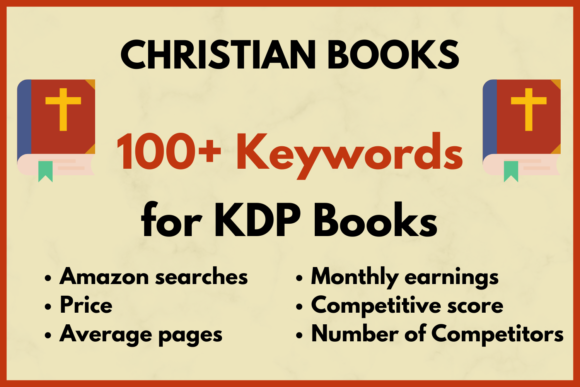
Christian Books KDP Keyword Research
When you publish Christian books on Amazon KDP, your keywords do more than just improve search rankings. They connect your message with readers who are actively seeking faith-based content. Keyword research for Christian books is not about stuffing popular terms into your metadata. It is about understanding the language your audience uses when they look for Bible studies, devotionals, children’s books, or theological works. Getting this right can mean the difference between a book that sells steadily and one that remains buried in search results.
Christian book publishing on KDP is a unique niche. Readers come with specific intentions: they want material that aligns with their denominational background, reading level, and spiritual needs. Keyword research helps you speak directly to those intentions. Instead of guessing what terms might work, you can identify the exact phrases your ideal readers type into the Amazon search bar. This process is both strategic and creative. It involves exploring the intersection of faith language, market demand, and your own content strengths.
Why keyword research matters for Christian books
Amazon’s algorithm relies on keywords to match listings with search queries. For Christian books, the stakes are higher than generic categories because the audience often searches with very precise language. A reader might look for “verse-by-verse study of Romans” rather than just “Bible study.” Another might search for “Christian parenting book for teens” instead of “parenting advice.” These specific phrases reveal deep intent. When you target them, you are not chasing broad traffic. You are reaching people who already know what they want.
Beyond ranking, keywords shape how your book is perceived. A well-chosen phrase in your subtitle or A+ content can signal authority, relevance, and trust. For example, a devotional titled “Daily Hope for the Caregiver” performs differently if the keyword research shows that “caregiver devotionals” is a high-traffic, low-competition phrase. That alignment makes your listing feel tailor-made for a specific reader group. It also improves your click-through rate because the title and subtitle resonate immediately.
Approaching keyword research with a creative mindset
Many publishers treat keyword research as a mechanical task. They copy terms from competitor listings or rely on generic tools. But Christian books benefit from a different approach. The language of faith is rich with nuance. Words like “grace,” “discipleship,” “renewal,” and “community” carry theological weight. When you pair these with practical search terms, you create keyword combinations that are both specific and meaningful.
Start with your book’s core message
Before you open any keyword tool, write down the core promise of your book. If it is a Bible study on the book of James, your core message might be “practical faith for everyday life.” From there, brainstorm phrases that combine that promise with searchable elements: “book of James Bible study for women,” “practical Christian living study,” or “faith in action workbook.” These phrases keep the search terms rooted in your content while reflecting real reader language.
Use Amazon’s autocomplete as a research tool
Amazon’s search bar offers one of the most honest sources of keyword ideas. Start typing a broad phrase like “Christian devotional for” and watch the suggestions appear. You will see completions such as “new moms,” “men,” “teens,” “anxiety,” or “grief.” Each suggestion represents a proven search pattern. Record these and test them against your book’s category. For Christian nonfiction, autocomplete often reveals emotional needs that your book can address. A devotional for anxiety is not just a keyword. It is a doorway to serving readers who are hurting.
Creative applications for different audiences
Keyword research is not a one-size-fits-all process. The terms that work for a Christian fiction novel differ from those that sell a Bible journal or a theology textbook. Understanding your audience segment helps you choose the right angle.
Christian fiction and romance
Fiction readers often search by trope, setting, or emotional promise. For Christian romance, keywords might include “clean romance Amish,” “Christian historical romance 1800s,” or “faith-based marriage fiction.” These terms signal both genre and value system. Publishers can also incorporate character names or series identifiers if the book is part of a larger collection. Consistent keyword use across a series builds brand recognition over time.
Bible studies and devotionals
This category rewards specificity. A devotional for “new believers” serves a different audience than one for “seasoned Christians seeking renewal.” Keyword research can reveal seasonal spikes as well. Terms like “Lenten devotional” or “Advent study for families” peak at predictable times. Planning your keyword strategy around the liturgical calendar gives your listings a timely relevance that boosts organic visibility.
Children’s Christian books
Parents and grandparents often search by age range, topic, and format. Phrases like “Christian board book for toddlers,” “Bible story picture book ages 4-8,” or “book about kindness for kids” combine demographic and moral content. Including words like “gift,” “bedtime,” or “Sunday school” can further refine the audience. These keywords help your book appear not just in general searches but also in category-specific browsing.
Practical ways to stay organized
Managing multiple keyword sets across several books can become messy. A simple spreadsheet with columns for primary keyword, secondary phrases, search volume estimates, and competition notes keeps everything visible. Update it after each launch and after any product listing changes. Over time, you will notice patterns. Perhaps a certain phrase consistently drives impressions, while another generates conversions. That data informs your future title and subtitle decisions.
Another useful method is to group keywords by reader intent. Create clusters for “beginners,” “seasoned readers,” “specific Bible books,” “topical studies,” and “life stages.” When you write your listing, pull from the cluster that matches the book’s target audience. This avoids the temptation to stuff unrelated keywords into your description, which Amazon’s algorithm may penalize.
Adapting keywords for different platforms and formats
KDP keyword research is just the start. The same research can inform your content strategy beyond Amazon. Blog posts, social media content, email newsletters, and podcast topics can all be built around the keywords your readers use.
Blogging and content marketing
If you write a blog alongside your Christian books, use your keyword list to generate article topics. A phrase like “how to study the Bible for beginners” can become a blog post, a free PDF lead magnet, and an Amazon listing keyword all at once. This multi-platform approach reinforces your authority and drives cross-channel traffic. When readers find your blog post helpful, they are more likely to trust your book on the same subject.
Social media and audience building
On platforms like Instagram or Pinterest, keyword-informed captions improve discoverability. For example, if “Christian gratitude journal” is a strong KDP keyword, use that phrase in your Pin titles and Instagram post descriptions. Visual content that matches high-intent keywords can drive traffic directly to your Amazon listing. The key is consistency. Use the same language across your book cover, description, and social posts so that readers recognize your offering.
Email campaigns and lead magnets
Grow your subscriber list by offering a free chapter or printable based on one of your high-performing keywords. A keyword like “prayer journal prompts” can become a downloadable PDF. When new subscribers join, they already know your content addresses their search. This shortens the trust cycle and makes your eventual book launch more effective.
Maintaining authenticity while optimizing
There is a tension between writing for search engines and writing for real people. Christian readers are especially sensitive to language that feels commercial or manipulative. Your keyword strategy should never compromise the tone of your message. A devotional that sounds like a keyword soup will repel the very readers you want to attract. The goal is to infuse search terms naturally into titles, subtitles, descriptions, and bullet points without losing warmth or clarity.
Read your listing aloud after inserting keywords. If a phrase feels forced, rephrase it or move it to the backend keyword field. Amazon allows seven backend keyword fields, each up to 50 characters. Use those for more competitive or lengthy phrases that do not fit your main copy. This keeps your visible text reader-friendly while still capturing search traffic.
Examples of effective keyword use
Imagine a Christian book titled “Renewed: A 40-Day Devotional for Women Overcoming Anxiety.” The primary keyword might be “devotional for women with anxiety.” Secondary keywords could include “Christian anxiety workbook,” “40 day devotional for anxious hearts,” “faith based mental health book.” Notice how each phrase maintains a natural flow while repeating essential elements. The title itself contains “devotional,” “women,” and “anxiety” — all high-value terms. The subtitle reinforces “overcoming anxiety.” Together, they create a cohesive keyword-rich listing that does not read like a search query.
Another example: a Bible study called “The Gospel of Luke: A Verse-by-Verse Study for Small Groups.” Here, keywords like “gospel of Luke study guide,” “small group Bible study,” “verse by verse Bible study,” and “Luke commentary for groups” can be woven into the description. Each points to a specific use case, helping different kinds of readers find the book. A small group leader searching for material will see a phrase that speaks directly to their needs.
Keeping your research current
Keyword trends shift over time. A phrase that works today may decline in six months as new books enter the market. Set aside time each quarter to review your keyword performance. Amazon’s Brand Analytics report, if available to you, provides actual search frequency data. For most indie publishers, the next best option is to monitor your own ad campaigns and see which search terms generate sales. Use that information to refresh your backend keywords and listing copy.
Also pay attention to cultural and seasonal changes. A phrase like “prayer for racial justice” emerged strongly in certain years. Books that aligned with that language saw organic growth. Staying aware of what your community is talking about helps you adapt your keyword strategy with empathy and relevance.
A final word on the craft
Keyword research for Christian books on KDP is not a shortcut. It is a discipline that combines market awareness, theological sensitivity, and a genuine desire to serve readers. When done well, it helps your book find its way into the hands of people who need it most. That is the heart of Christian publishing — connecting truth with readers in a format that meets them where they are. Let your keywords reflect that mission. Keep them honest, specific, and grounded in the language of faith. The search algorithms will follow, but more importantly, your readers will feel seen.